Buyers Guide to Selecting Air Cooled Heat Exchangers
Selecting the right air-cooled exchanger requires matching thermal load, ambient conditions, and mechanical constraints. This guide outlines selection criteria for sizing, materials, and airflow, helping buyers avoid common oversizing and maintenance errors.
- Match the thermal load to the unit capacity, accounting for ambient air temperature and humidity.
- Prioritize fin geometry and tube materials based on corrosion risk and fouling potential.
- Verify fan performance and airflow velocity to ensure the unit meets design intent.
- Review maintenance access and inspection requirements during the selection phase.
Understanding the Thermal Load and Design Conditions
The first step in air-cooled exchanger selection is defining the exact thermal duty. This means calculating the heat rejection rate, often expressed in kilowatts or British thermal units per hour. You must also establish the process fluid properties, including flow rate, inlet temperature, outlet temperature, and specific heat. Without these baseline numbers, any selection is a guess.
Ambient conditions set the boundary for performance. Air-cooled units reject heat to the surrounding atmosphere, so the design temperature is not fixed. A unit sized for 35 degrees Celsius ambient air will lose capacity at 45 degrees Celsius. High humidity also affects the latent heat capacity of the air stream, which can reduce effective cooling. Buyers should specify the design ambient conditions and the maximum allowable ambient temperature.
The process side also matters. If the fluid is water, glycol, or oil, the viscosity and fouling characteristics change the required surface area. A clean water loop requires less surface area than a brine solution prone to scaling. Define these parameters before moving to the selection criteria.
Key Selection Criteria for Air Cooled Units
Selection criteria drive the final choice between manufacturers and models. The table below summarizes the primary factors engineers evaluate.
| Criterion | What to look for | Why it matters |
|---|---|---|
| Thermal Capacity | Rated kW or BTU at standard ambient conditions | Ensures the unit meets the process load with adequate margin. |
| Fin Geometry | Fin density, tube spacing, and material | Affects airflow resistance and heat transfer efficiency. |
| Tube Material | Stainless steel, carbon steel, aluminum, or copper | Determines corrosion resistance and cost. |
| Fan Configuration | Number, size, and speed of fans | Drives the airflow volume and static pressure. |
| Fouling Factor | Design margin for dirty fluid or air | Protects performance over the service life. |
| Noise Requirements | Decibel ratings at operating distance | Meets site regulations and operator comfort standards. |
Each criterion interacts with the others. A dense fin pack increases heat transfer but raises pressure drop. This requires larger fans, which increases noise and power consumption. The goal is a balanced design that meets the thermal requirement without excessive mechanical penalty.
Material Selection and Corrosion Considerations
The tube material defines the service life of the unit. Carbon steel is the most common and least expensive option. It works well in clean, dry air environments where the process fluid does not contain aggressive chemicals. However, it corrodes rapidly in coastal or humid conditions.
Stainless steel, typically grades 304 or 316, offers better resistance to rust and chemical attack. It is the standard choice for marine, chemical, or food processing applications. Aluminum is lightweight and efficient but requires careful handling of dissimilar metals to prevent galvanic corrosion. It also performs poorly in high-chloride environments.
The fin material is often the same as the tube material, but not always. Copper fins can be attached to aluminum tubes in some designs. This joint must be evaluated for compatibility. Buyers should specify the maximum pH range of the process fluid and the presence of chlorides, ammonia, or other corrosive compounds. This information guides the material selection.
Airflow, Fan Performance, and Fan Control
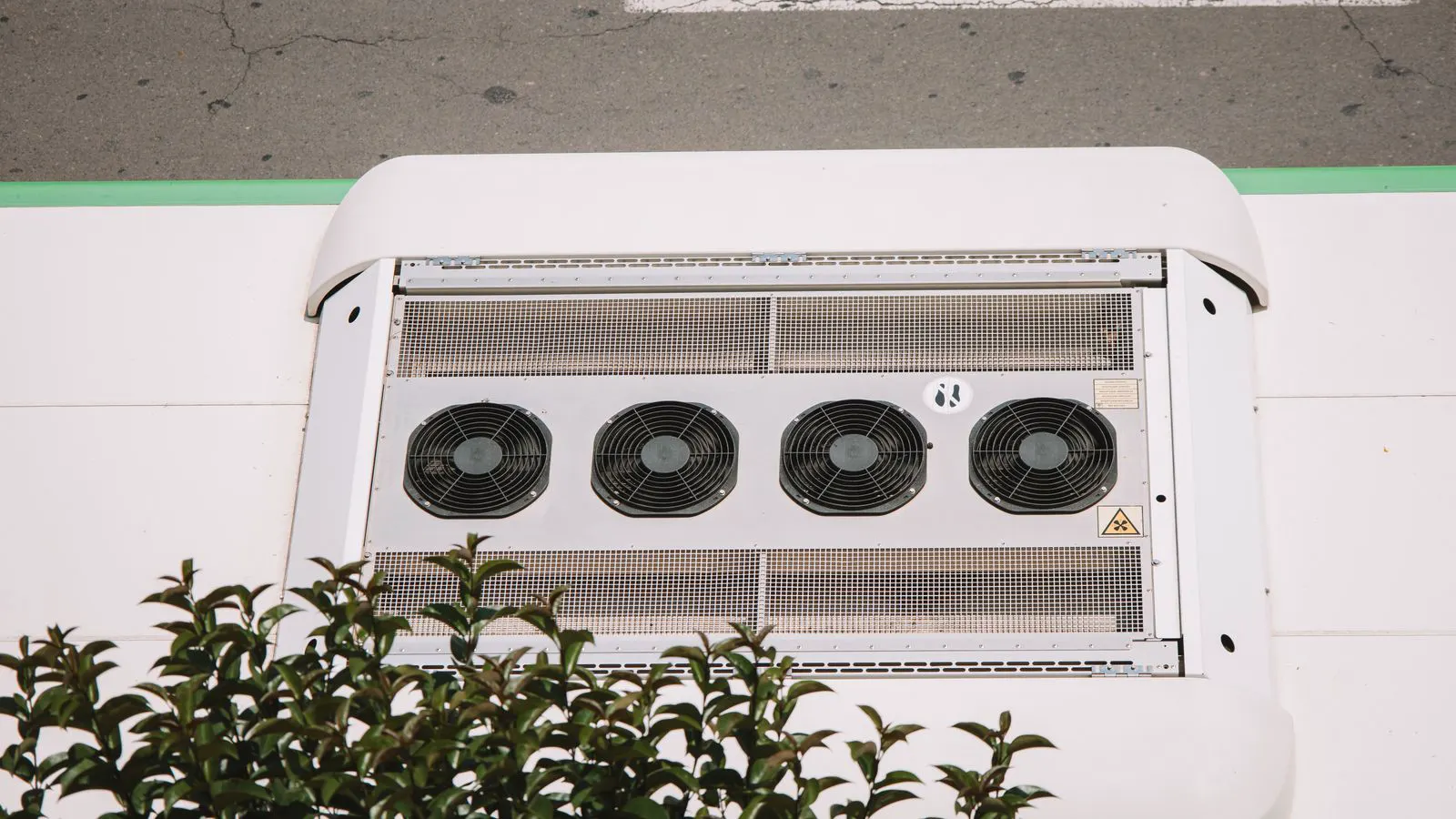
The fan system is the engine of an air-cooled cooler. It moves air across the fin pack to absorb heat. If the airflow is too low, the air leaves the unit at a temperature close to the process fluid temperature, reducing the driving delta. If the airflow is too high, you waste energy without proportional cooling gains.
Check the fan power rating and the motor efficiency. Variable speed drives are common in large installations. They allow the fan to slow down during low-load periods, reducing power consumption. A fixed-speed system is simpler but consumes full power regardless of the ambient temperature.
Static pressure is the second airflow factor. The fan must overcome the resistance of the fin pack, the plenum, and any inlet or outlet ducting. A unit designed for low static pressure will struggle if installed with restrictive ductwork. Verify the fan curve against the system resistance curve. The operating point must fall within the manufacturer’s recommended range.
Sizing the Unit and Accounting for Fouling
Sizing is not a linear calculation. Air-cooled units have a non-linear relationship between surface area and heat transfer. Adding more surface area helps, but only up to a point. Beyond a certain density, the marginal gain in heat transfer drops sharply.
Fouling is the primary factor that erodes capacity over time. Air fouling comes from dust, pollen, or oil mist. Water fouling comes from minerals, microbes, or suspended solids. A unit sized for clean conditions will underperform in a dirty environment. Engineers apply a fouling factor to the heat transfer coefficient. This reduces the effective area.
The fouling factor must be based on actual process data. Do not use a generic number. If the fluid is a clean solvent, the fouling factor is low. If it is a cooling water loop, it is higher. This distinction changes the required surface area. A conservative fouling factor prevents the unit from being undersized.
Installation Constraints and Maintenance Access
The physical footprint of the unit must fit the site. Air-cooled coolers require clear space for air intake and exhaust. Blocking the intake with walls, fences, or other equipment recycles hot air back into the unit. This is called recirculation and it kills performance.
Check the inlet and outlet air velocity limits. The inlet air must be clean and cool. The outlet air should be discharged away from the intake area. In tight spaces, a plenum or duct may be required. This adds pressure drop and must be accounted for in the fan selection.
Maintenance access is a long-term cost factor. Fin cleaning, fan bearing inspection, and tube leak checks require physical access. Some units allow the fins to be pulled out for cleaning. Others require a high-pressure water wash. Choose a design that matches your maintenance resources. A unit with complex internal geometry may be difficult to clean.
Common Selection Mistakes to Avoid
The most common mistake is sizing based on the nameplate capacity without adjusting for ambient conditions. A unit rated at 100 kW at 30 degrees Celsius will not deliver 100 kW at 40 degrees Celsius. The capacity curve must be reviewed.
Another error is ignoring the process fluid viscosity. A heavy oil has a lower heat transfer coefficient than a water-glycol mix. This requires a larger surface area to achieve the same duty. If the viscosity is high, the tube length and diameter must be selected to promote turbulence.
Noise is often an afterthought. A unit that meets the thermal requirement but exceeds the site noise limit must be redesigned. This is expensive. Specify the maximum allowable decibel level at the property line during the selection phase.
Finally, do not overlook the electrical load. Multiple fans can draw significant power. Verify that the site electrical supply can handle the peak load. A three-phase supply is typical for large units.
Final Decision Checklist
Use this checklist to verify the selection before placing the order.
- Thermal Duty: Is the heat rejection rate calculated for the maximum process load?
- Ambient Conditions: Are the design and maximum ambient temperatures specified?
- Fluid Properties: Are the viscosity, flow rate, and corrosion characteristics defined?
- Material Compatibility: Do the tube and fin materials match the process environment?
- Fouling Factor: Is a realistic fouling factor applied to the heat transfer calculation?
- Airflow: Is the fan system sized for the required static pressure and airflow?
- Noise: Does the unit meet the site noise regulations?
- Footprint: Does the unit fit the available space with proper intake and exhaust clearance?
- Maintenance: Is the design accessible for routine cleaning and inspection?
- Electrical: Does the site supply meet the fan motor requirements?
If any item is unclear, hold the selection. A unit selected with missing data will require a redesign. The cost of a redesign is higher than the cost of a correctly specified unit.
Frequently asked questions
How does ambient temperature affect air-cooled exchanger selection?
Higher ambient temperatures reduce the temperature difference between the process fluid and the air. This lowers the heat transfer rate. You must size the unit for the maximum expected ambient temperature.
What is the difference between a shell-and-tube and an air-cooled heat exchanger?
Shell-and-tube units use a liquid coolant like water. Air-cooled units reject heat directly to the atmosphere. Air-cooled units eliminate the need for a secondary cooling loop.
When should I choose stainless steel tubes?
Choose stainless steel when the process fluid is corrosive or when the ambient air has high humidity or chloride content. Carbon steel is suitable for clean, dry environments.
How do I know if the fin pack is too dense?
A dense fin pack increases heat transfer but raises the pressure drop. If the fan power increases significantly or the unit makes excessive noise, the fin density may be too high for the installation.
Can I retrofit an air-cooled unit with a variable speed drive?
Yes, in many cases. Variable speed drives allow the fan to adjust to the thermal load. This reduces energy consumption during low-demand periods. Check with the manufacturer before retrofitting.