Heat Exchanger Fouling: The Main Mechanisms Explained
Heat exchanger fouling reduces heat transfer by blocking flow and adding thermal resistance. Deposits form through scale, corrosion, biofilm, and mechanical wear. Knowing these mechanisms helps you select materials, set maintenance schedules, and manage long-term performance without guessing.
- Fouling is not one single problem. It is a mix of scale, corrosion, biological growth, and mechanical wear.
- The type of deposit you see changes the best material choice and the maintenance plan.
- Predicting fouling starts with understanding the fluid chemistry, temperature path, and velocity.
- A clean design and a clear operating procedure reduce the need for aggressive cleaning later.
- Monitoring pressure drop and performance trends is the fastest way to catch fouling before it becomes a shutdown.
Heat exchanger fouling is the buildup of unwanted material on the metal surfaces that transfer heat. That material can be mineral scale from hard water, rust from corrosion, slime from bacteria, or loose debris from the process stream. Every type adds thermal resistance and blocks the flow. The result is lower efficiency, higher energy use, and eventually a need for chemical cleaning or mechanical scraping.
This article breaks down the main mechanisms so you can read a datasheet, a process sheet, or a maintenance log with more confidence. You will see how each mechanism works, what it looks like, and what it means for the equipment you are sourcing.
What counts as fouling, and why does it matter?
Fouling is any deposit that reduces the heat transfer area or the flow path. It is different from normal wear. Normal wear is the slow thinning of metal from use. Fouling is a physical layer that sits on top of the metal or inside the channels.
The effect is simple to measure. A clean tube has a certain pressure drop at a given flow. As fouling builds, the channel narrows. The pressure drop rises. The metal surface becomes less effective. The same heat load now requires higher temperatures or longer residence time. If the exchanger is in a power plant, a refinery, or a cooling tower, that extra demand shows up as higher fuel use or reduced capacity.
For sourcing decisions, fouling changes the conversation. You are not just buying a shell and tubes unit. You are buying a surface that must survive a specific chemical environment for a specific number of years. If you buy the wrong material, the deposit will form faster and clean harder. If you buy the right material, the same deposit may be less severe and easier to remove.
How scale forms and why it sticks
Scale formation is the most common mechanical fouling problem in cooling water systems. It happens when dissolved minerals come out of solution. The usual suspects are calcium carbonate, calcium sulfate, silica, and iron oxides.
The trigger is usually temperature. Water holds more dissolved minerals at lower temperatures. When the water passes through the exchanger and heats up, the solubility drops. The minerals precipitate. They land on the coolest spot first. In a shell and tubes exchanger, that is often the first few rows of tubes, where the water enters and is still relatively cold.
Scale is hard. It is not soft sludge. It is a compact layer that can be several millimeters thick over years of operation. It is also very resistant to heat transfer. Even a thin layer can double the thermal resistance of the tube wall.
The problem is not just the thickness. It is the shape. Scale often grows in rough, jagged patterns. Those rough edges trap more particles. They create a place for new scale to form. Once a small ridge appears, it becomes a seed for more growth.
This is where material choice matters. If the water chemistry is slightly acidic, the tubes may corrode. Corrosion products mix with the scale. The result is a darker, looser deposit that is harder to remove than pure scale. If the water is balanced, the scale may be more uniform and easier to clean with a mild acid.
How corrosion creates fouling
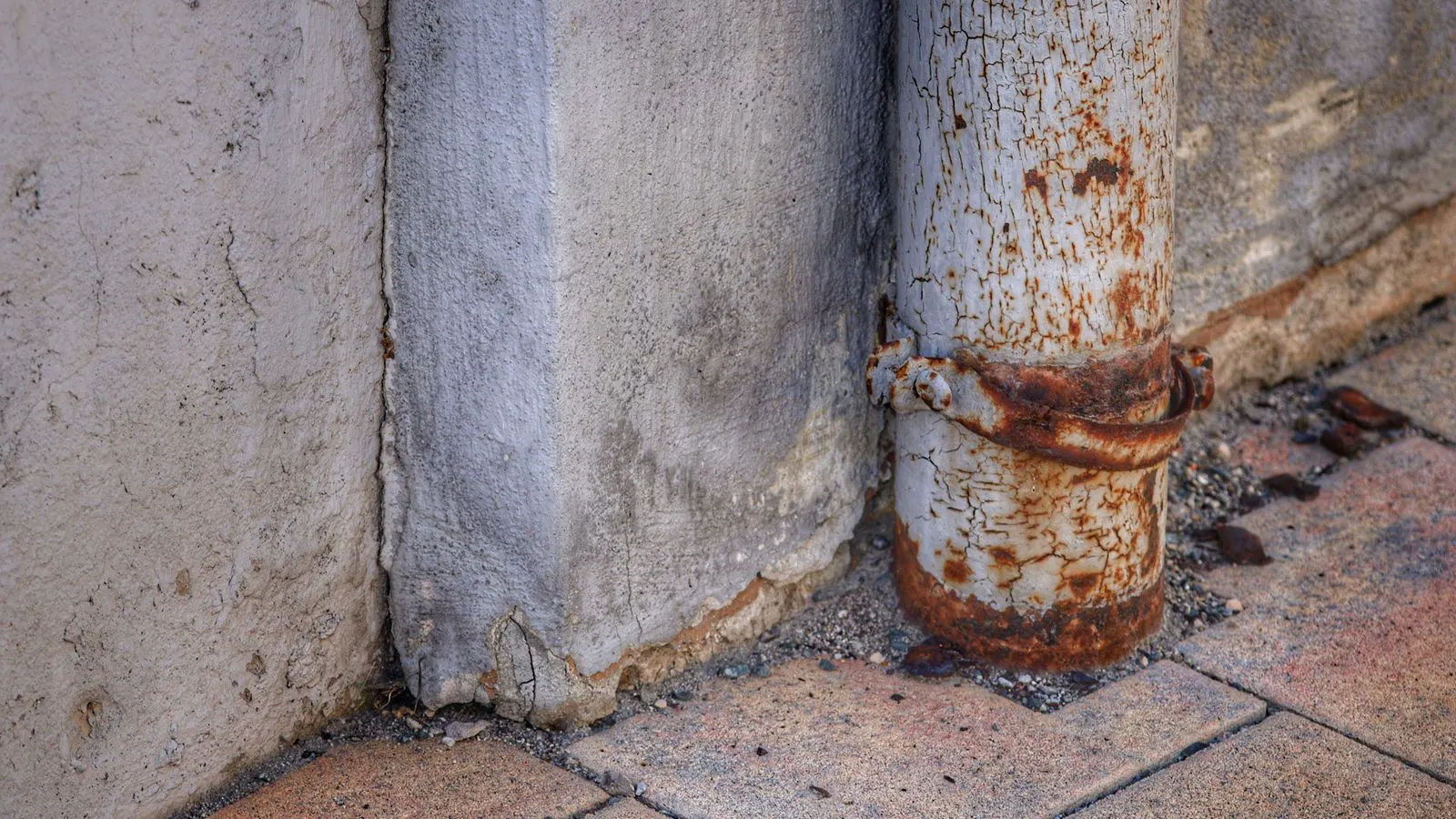
Corrosion is not always a separate problem from fouling. Often it feeds it. When metal reacts with the water or the process fluid, it forms oxides and rust. Those solids fall into the flow. They settle on the tubes. They become a base for other deposits.
Iron oxide scale is a good example. It is reddish brown. It is loose compared to calcium carbonate. It can be washed away by a high flow rate, but it can also redeposit on low velocity spots. In a vertical shell, the bottom of the shell is a dead zone. Iron oxide settles there. Over time, it builds up.
The source of corrosion is usually the water chemistry. pH, dissolved oxygen, chloride concentration, and temperature all matter. A small shift can change the corrosion rate. If the water is too acidic, the metal dissolves faster. If it is too basic, some minerals precipitate faster.
For sourcing, this means you need to look at the water report before you pick the tube material. Carbon steel is common and inexpensive, but it corrodes in many cooling water systems. Stainless steel resists corrosion better, but it costs more and can suffer from pitting if chlorides are present. Alloy options exist for aggressive environments, but they are more expensive. The right choice is the one that matches the water chemistry and the maintenance plan.
How biofilm and biological growth form
Biological fouling is caused by microorganisms. Bacteria, algae, and fungi grow in the water. They create a slime layer called biofilm. That layer is soft and sticky. It traps dust, debris, and minerals. The result is a composite deposit that is harder to clean than any single type.
Biofilm is a problem in warm water systems. It grows fastest when the water is not hot enough to kill the organisms but not cold enough to stop them. It also grows in low light, low flow, or stagnant zones. In a shell and tubes exchanger, the shell side can have low velocity if the baffle design is not good. That gives the biofilm time to attach.
Biofilm is not just a cosmetic issue. It is an insulator. It adds thermal resistance. It also creates an anaerobic environment where bacteria can produce acids. Those acids corrode the metal. The corrosion products then feed more biofilm growth. It is a cycle.
For sourcing, the focus is on design. You want to avoid stagnant zones. You want smooth surfaces that are hard for bacteria to grip. You want a maintenance plan that includes biocide injection. Material choice still matters, but the design and the water treatment program are more critical here.
How mechanical fouling and debris get in
Mechanical fouling is the simplest to understand. Solid particles enter the exchanger and stick to the tubes. The particles can be dust, sand, plant matter, or rust flakes. They do not need a chemical reaction to form. They just need a place to land.
The problem is velocity. If the flow is too low, the particles settle. If the flow is too high, the particles hit the tubes and wear the metal. In some cases, the particles act like sandpaper. They abrade the tube wall. They create roughness. That roughness then traps more particles.
Mechanical fouling is common in food processing, paper mills, and chemical plants. The process stream carries solids. The exchanger sees them every day. If the inlet filter is clogged or the bypass line is open, the solids get straight into the tubes.
For sourcing, this means you need to look at the process. What is in the stream? What is the particle size? What is the flow rate? If the stream is dirty, you may need a larger inlet filter, a pre-cooler, or a different tube layout. A simple tube bundle may not handle the debris. A larger diameter tube may be easier to clean.
How to predict which mechanism will dominate
You cannot predict fouling perfectly. But you can narrow the field. Look at the fluid. Look at the temperature path. Look at the velocity. Look at the history.
If the water is hard and the temperature rises, scale is likely. If the water is acidic or has high oxygen, corrosion is likely. If the water is warm and organic, biofilm is likely. If the stream carries solids, mechanical fouling is likely.
Most real systems have more than one. A cooling tower loop may have scale and biofilm. A process heat exchanger may have corrosion and mechanical debris. The key is to know which one is the main driver. That tells you where to spend your maintenance budget.
A simple way to check is to look at the pressure drop trend. If the pressure drop rises slowly and steadily, it is often scale or biofilm. If it rises in steps, it is often debris or a clogged filter. If the performance drops without a big pressure drop change, it may be a thin, uniform layer of scale or corrosion.
What this means for sourcing and maintenance
Knowing the mechanisms changes how you buy and how you run the unit.
For sourcing, match the material to the deposit. If scale is the main problem, look for materials that resist scaling or that clean easily. If corrosion is the main problem, look for materials that resist the specific chemistry. If biofilm is the main problem, look for smooth surfaces and good design.
For maintenance, match the plan to the deposit. Scale may need an acid wash. Corrosion may need a scale inhibitor. Biofilm may need a biocide. Mechanical debris may need a filter change. A generic maintenance plan that applies the same cleaning to every unit will work sometimes, but it will not always.
The best practice is to monitor. Keep a log of pressure drop, inlet and outlet temperatures, and flow rates. Look for trends. A small change is easier to fix than a big one. When you see the trend, you can clean the unit while it is still running, or you can schedule a short shutdown.
A worked example in plain words: imagine a cooling exchanger that uses seawater. The water has high salinity. The temperature rises from 25 to 40 degrees. The scale will form. The salinity also means corrosion is possible. The biofilm risk is lower because the water is not warm enough for some species, but not impossible. The sourcing decision is to pick a tube material that resists both scale adhesion and chloride corrosion. The maintenance plan is to monitor pressure drop and run a biocide program. The design should avoid low velocity zones where biofilm can start. If you only pick the cheapest tube material and ignore the water chemistry, you will pay for it in cleaning downtime and early failure.
| Fouling Type | Main Cause | Typical Look | Primary Risk |
|---|---|---|---|
| Scale | Mineral precipitation | Hard, white or brown crust | High thermal resistance |
| Corrosion | Metal reaction | Rusty flakes or smooth oxide layer | Pipe wall loss, loose deposits |
| Biofilm | Microbial growth | Slimy, green or black layer | Acid production, corrosion feed |
| Mechanical | Solid particles | Loose dust, sand, or debris | Erosion, clogging, roughness |
| Combined | Multiple sources | Mixed color and texture | Unpredictable, hard to clean |
- Check the water chemistry before you select the tube material.
- Look at the temperature path to see if scaling is possible.
- Check the velocity to see if debris will settle.
- Ask the supplier about the surface finish and the material resistance.
- Set a monitoring plan for pressure drop and performance.
What to ask the supplier and the operator
When you are sourcing a heat exchanger, ask for the expected fouling factor. That is a number that accounts for the deposit in the heat transfer calculation. If the supplier uses a low fouling factor, the unit may be smaller and cheaper. But it may not perform as expected in the real field. If the supplier uses a high fouling factor, the unit may be larger and more expensive. But it may handle the deposit better.
Ask about the tube material options. Do not just ask for “stainless.” Ask for the specific alloy and why it is recommended for your water chemistry. Ask about the surface treatment. A passivated surface resists corrosion better. A polished surface resists biofilm better.
When you are operating the unit, ask your maintenance team what they see during cleaning. If they scrape off a hard crust, it is scale. If they scrape off a soft slime, it is biofilm. If they find rust flakes, it is corrosion. That information is worth more than a generic maintenance schedule.
The goal is not to eliminate fouling. That is not possible. The goal is to understand it. When you know the mechanism, you can choose the right material, design the right layout, and set the right maintenance plan. The result is a unit that runs longer, uses less energy, and costs less to maintain over its life.
Frequently asked questions
What is the fastest sign that a heat exchanger is fouling?
A steady rise in pressure drop at the same flow rate is the most direct sign. The same change in performance with a small temperature difference shift is also a strong indicator.
Can a heat exchanger be designed to avoid fouling completely?
No. Fouling is driven by the fluid chemistry and the operating conditions. You can reduce it, but you cannot eliminate it. The design can slow it down and make it easier to remove.
Which material is best for a cooling water system?
There is no single best material. Carbon steel is common for clean water. Stainless steel is better for corrosive water. Alloy options are for aggressive environments. The water report decides the choice.
How often should I clean a heat exchanger?
It depends on the fouling rate. Scale may build slowly over years. Biofilm can grow in months. Mechanical debris can clog a unit in days. Monitoring pressure drop tells you when it is time.
Does the tube layout affect fouling?
Yes. A layout with low velocity zones gives scale and biofilm time to attach. A layout with high velocity may cause erosion. The baffle design and the tube spacing both matter.